
Black Friday With a Psychologist: Shopping Addiction and “Retail Therapy”

Introduction to Shopping Addiction and “Retail Therapy” (aka Emotional Spending)
The holiday season is upon us again. The holidays are known as a triggering time in the mental health professions for so many reasons. We encounter dysfunctional family members who bring up hard emotions for us. We’re faced with the expectation of happiness and feel confused and sad if the “cheer” we see around us does not match our internal weather. We long for connection that we may not have every holiday season. We are tempted by the addictions we’re trying to recover from, such as alcohol, other drugs, sex/love, gambling. The holidays are used to justify so many questionable things we might normally be able to resist. Like, “Come on, it’s the holidays.”
I want to focus on a topic that is often overlooked in the mental health space: shopping. As Black Friday approaches, I see my news and social media feeds drawing me into a dizzying array of discounts and deals. Who of us is not tempted by shiny new objects, at a special price, for a limited time? Especially when our algorithms are tailored just for us and we’re shown exactly the kind of chunky sweater we’ve been wanting since it got cold. For folks who are grappling with shopping addiction or emotional spending, Black Friday is indeed a dark occasion that can bring destructive urges. Those urges can thrust us into vicious cycles of impulse and regret.
I’d like to explore the following topics in this installment.
What we mean when we talk about shopping addiction, “retail therapy,” and emotional spending.
Why it feels so good to shop.
Strategies for managing the impulse to shop.
What is a Shopping Addiction?
The term “shopping addiction” refers to an addiction-like relationship with the behavior of buying things. It is characterized by an irresistible urge to shop and spend money, often leading to negative consequences. Shopping addiction is a behavioral addiction similar to playing video games and gambling. Whether or not shopping can be considered a clinically significant abuse disorder similar to substance abuse is a matter of some debate among mental health professionals and researchers. The majority opinion right now is that while shopping addiction is problematic and can cause severe problems for people, it may not share the neurobiological mechanisms of substance addiction.
And yet, shopping addiction is pervasive and severe enough to be officially recognized in the two most widely used mental health diagnostic systems in the world: the DSM-5-TR and ICD-11. In both systems, it is classified as a disorder of “impulse control.” The basic concept of a shopping addiction is nothing new and has been around for well over a century. It was called oniomania and first appeared in the German translation of Psychiatric Lectures in 1892. If you can imagine it being recognized as a problem in the late 19th century, you can imagine how the arrival of online shopping has made it even more difficult to resist the impulse to buy things we don’t necessarily need.
Some clinicians and researchers are advocating for shopping addiction to be taken more seriously in mental health research. One thoughtful proposal has been for the addition of Compulsive Buying Disorder (CBD) in diagnostic manuals so that it can be identified by clinicians and treatment options can be covered by insurance. What I have found to be so valuable about the body of research on CBD is that it connects shopping addiction to other psychological symptoms and conditions, making it more understandable to clinicians and clients alike. For instance, individuals who experience CBD are also likely to have at the same time depression and anxiety. It’s been useful in my own clinical work to think of shopping urges as a strategy to regulate one’s emotions, reduce stress and anxiety, and quite simply, to feel good.
What is Emotional Spending?
Many of us use shopping as a way to cope, just as we use other resources in our lives, such as substances, food, Netflix shows, etc. This behavior does not always rise to the level of addiction because it may not cause serious negative consequences. Shopping as coping is called emotional spending. You can think of it as the shopping equivalent to “eating your feelings.” I believe it’s extremely difficult to never engage in emotional spending because we live in a consumerist culture that bombards us with the message that stuff will make us happier. Think about it. If you look around at any form of advertisement, its basic premise is that we will feel less lonely, more loved, more beautiful, thinner, cooler, younger, smarter, more cultured, healthier, or more confident if we buy something. So why wouldn’t we try to solve our negative emotions through spending?
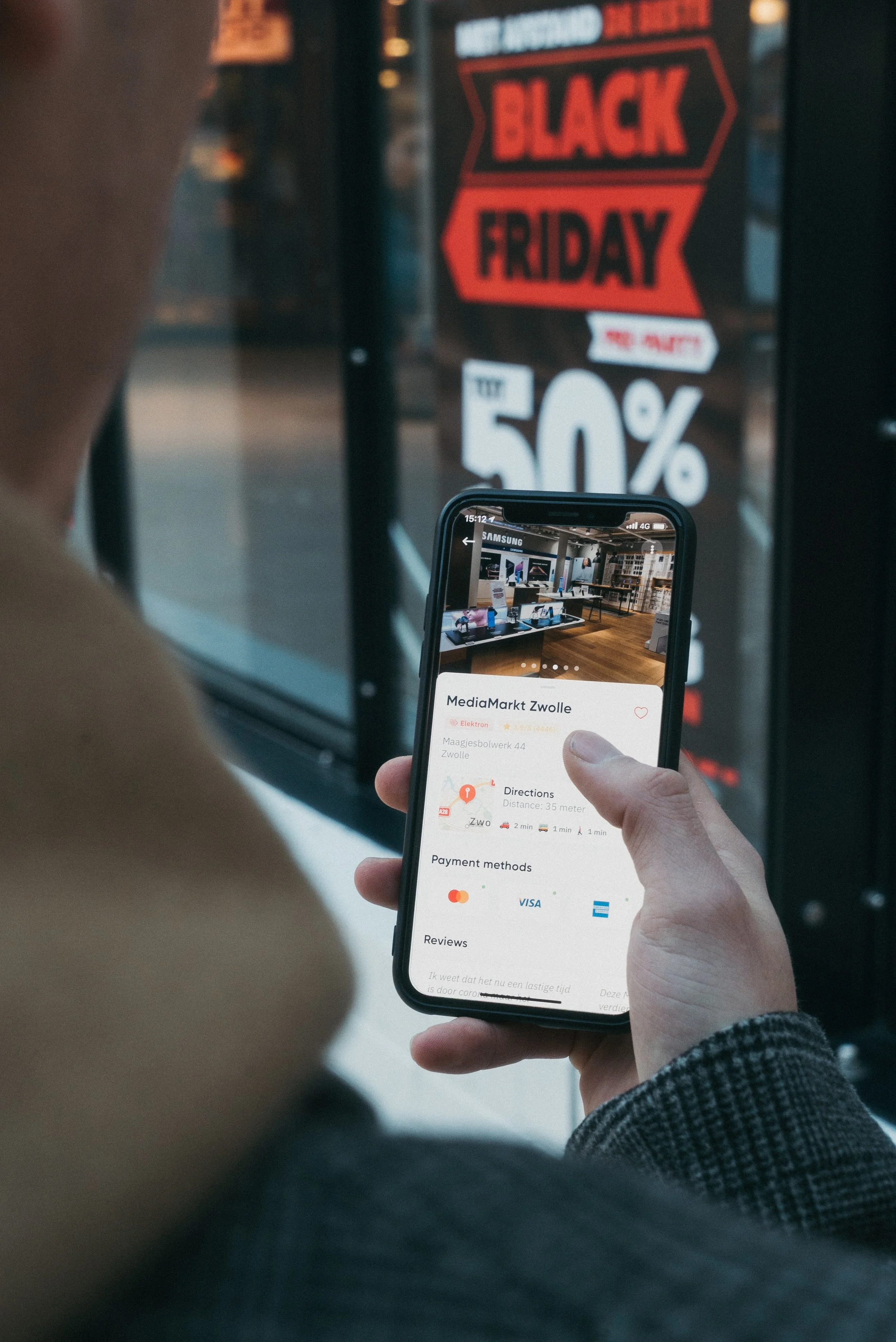
Emotional spending is the shopping equivalent to “eating your feelings.”
But Is Retail Therapy Actually Therapeutic?
I like the honesty of “retail therapy,” which is shopping for the sake of feeling better. I appreciate the ritual of a person going out into the world and deciding for themselves which stores they browse and what they buy. There is something really empowering here. For many people, it’s a way to get some valuable downtime, particularly when there are competing demands on one’s time. Shopping is also a way to benefit from the weak ties that enrich our lives when we interact with all the people we encounter in shopping spaces.
Online retail therapy strikes me as a really different psychological experience. For starters, it’s generally done alone, so the social aspect of leaving your home and going to a third space is gone. Then, there’s the fact that it’s on a screen, which is generally associated with stress, anxiety, diminished attentional control, negative social comparison, and physical sedentariness. But like so many screen activities, we get a dopamine boost from certain actions we take, like winning a game or getting a like or comment. Have you ever noticed how you feel when you finish checking out in your Amazon or Poshmark app? There’s a sense of accomplishment, coupled with feelings of happy anticipation and pleasure.
There’s no denying that retail therapy can bring us pleasure and make us feel good, but the benefits are short-term. Unlike actual therapy, retail therapy does not help us resolve or heal things. It might even be a way for us to avoid or escape the problems that we need to confront in our lives. It’s interesting to think of shopping as self-care, which many people do. Should taking care of ourselves cost money? When we buy things to engage in self-care, are we also doing the things that prevent our stress and anxiety levels from getting higher in the future, such as getting enough movement, eating nutritious food, getting our needs met in relationships, learning and growing in ways that feel good for us, etc.? In our consumerist society, it’s not surprising at all that we should think of self-care as a product we purchase. But for anyone who takes their mental health seriously would know, shopping is not enough. Ultimately, the way we cope should not create other problems for us by using a resource that might support us better if we saved it for the future.
The stuff we buy can’t permanently change our level of contentment. This is because of a psychological phenomenon known as hedonic adaptation that has us return to our baseline level of mood/emotions regardless of life events and novel objects we have in our environment. We may feel some temporary excitement and joy about a new object but sooner than we might expect, we will get used to it and it becomes the new normal. In “Good-Bye Things: The New Japanese Minimalism,” Fumio Sasaki describes this cycle in a really compelling way.
“The glory of acquisition starts to dim with use, eventually changing to boredom as the item no longer elicits even a bit of excitement. This is the pattern of everything in our lives. No matter how much we wish for something, over time it becomes a normal part of our lives, and then a tired old item that bores us, even though we did actually get our wish. And we end up being unhappy.” - Fumio Sasaki
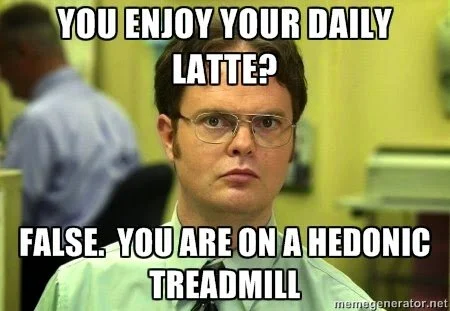
So say it with me: the shiny new thing can’t make us happy. We are on a hedonic treadmill. And here’s a meme that many a psychology student has used to remember the concept of hedonic adaptation.
Holding Onto Ourselves in a Consumerist Culture
Emotional spending takes on a feeling of frenzy around the holidays and Black Friday. Black Friday promises consumers that it’s okay to indulge because it’s a precious opportunity to get something at a discount. In a lot of AANHPI communities and families, Black Friday is a time to get a good deal, which is a value often passed down from one generation to another. (I’ll save the mixed messages from Asian families about money for another day.) In our enthusiasm to get a good deal, some of us might end up buying things we don’t need or will grow tired of sooner than we expect.
Consumerism is in the very air we breathe. There’s no escape. Shopping may also be reinforced by our desire to mirror what we see in our peers. We tend to dress the way other people do or want brands that are coveted by other people. Shopping problems can also intersect with cultural and identity dynamics. In AANHPI communities, there might be an expectation that one wears nice, new, fashionable clothes (as in Korean culture). Also, fashion and appearance may be important avenues for self-expression, especially among Asian American young adults. In some families or friend groups, there may be a certain “keeping up with the Joneses” atmosphere when it comes to designer or luxury goods. Across cultures, gender norms and expectations play a significant role in shaping shopping behaviors as well. A striking illustration of this is the societal pressures on women to meet certain beauty standards by consuming skincare and make-up and hair products and getting plastic surgery (as explored in Elise Hu’s book “Flawless”).
If what we are buying and the act of buying are connected to feelings of inadequacy and low self-esteem, it makes sense that compulsive buying can develop into something that becomes increasingly problematic over time. Shopping doesn’t take those feelings away and in the absence of other ways to address the feelings, retail therapy may turn into a self-destructive habit that leads to feelings of shame and guilt.
There are many challenges and at the same time, there are some real choices we can start practicing that help us wrest control over the emotions that drive us to emotional spending.
Here are my 8 recommendations for dealing with emotional spending.
Explore Your Triggers
Is there an event, a person, or a problem that makes you want to shop? A time of year? A feeling? Stress? It’s important to figure out what triggers emotional spending. This self-knowledge can then empower you to be prepared for your specific triggers and have a plan in place to cope with them. For instance, if you know you tend to do online shopping on your phone after you get home from a really busy and stressful day at work, you can resolve to put your phone away in your sock drawer and take a walk instead.
2. Adopt Alternative Coping Strategies
Emotions do not have to back us into a corner. Every person is capable of developing healthier coping mechanisms for even their toughest emotions, but it takes work and commitment to figure out what they are. Common coping strategies include exercise, journaling, meditation, and taking a bath. When you have the urge to buy things you don’t need, you can practice taking a step back and asking yourself, what else can I do to cope in this moment? What would ground me? What would support me? What would help me feel a bit better?
3. Clarify Your Values
What are your values related to money and finances? How do you feel about debt? If you’re not sure, this is worth exploring in more detail. When I work with clients on emotional spending, the value of “frugality” often comes up. Sometimes it comes up as a value that a client genuinely holds for themselves but their actions have reflected otherwise, causing dissonance that leads to shame and guilt. Other times it comes up as a value someone believes they should have but actually (upon exploration) does not personally resonate for them. It’s important to figure out what you actually want your relationship with money to be so that you have a guideline for making decisions about spending.
4. Set a Budget
Establishing a clear budget for discretionary spending is a foundational step in managing shopping addiction. Even if your spending is not an addiction per se, a budget can still help by limiting your spending on non-essential goods. When retail holidays such as Black Friday roll around, it’s a good idea to set a budget for what you buy so that you don’t end up over-spending in a short period of time. If setting a budget is a new practice, here are some helpful tools from the government that can get you started.
5. Shop with an Accountability Partner
If you’re going out shopping at brick and mortar stores, you can take a trusted friend or family member for support. They can help keep you accountable to your long-term financial goals, provide perspective on your purchases, and offer encouragement to resist impulsive buying that you might regret later. If you’re preparing for an online shopping occasion such as Black Friday, ask a safe person in your life to be your accountability partner for that. Shopping accountability partners can discuss budgets, establish limits for each item or category, and also establish time limits on shopping websites or apps.
6. Establish a "Cooling-Off” Period
When you find you want to buy something non-essential, make it a habit to implement a "cooling-off" period before making the purchase. The period can whatever length of time you feel you need to gain a balanced perspective on the purchase you’d like to make. I would suggest 48 hours as a minimum. After the cooling period, if you still want to make the purchase, you can keep exploring your reasons for that or allow yourself to buy it.
7. Seek Professional Help
If shopping addiction or emotional spending significantly impacts your well-being, seeking support from a professional is necessary. A licensed psychologist or therapist can provide personalized strategies to address the root causes of emotional spending, especially since this is often connected to simultaneous mood and anxiety symptoms. Shopping addiction is a holistic problem, however, and people who struggle with this issue also benefit from the support of financial educators and counselors, support groups, medical prescribers, and spiritual leaders. Many people find the 12-step group Debtors Anonymous to be essential in their recovery.
8. Focus on Experiential Purchases Instead
If it feels too irresistible to not shop or spend money, you can limit yourself to experiential purchases. Things like getting your nails done, getting a massage, doing a float session for an hour, going to a concert with friends, taking a class, taking a trip, etc., can bring positive emotions that last longer than material possessions. These activities often give our mental health a boost in other ways, such as by helping us connect to the friends or loved ones we do them with.
Shopping Addiction & Emotional Spending: Conclusions
My conclusion is that shopping has a limited role to play in overall psychological well-being. That may seem obvious when we take a moment to think it through but actually, it’s likely that you have internalized the message that fulfillment comes from the stuff we have. It’s nearly impossible to escape this messaging in the consumerist culture we live in.
When difficult emotions or stress arise, it’s all too easy to try to cope by buying something that brings us momentary joy. Online shopping has made that process even more accessible and immediate. Black Friday's enticing bargains can exploit our tendency to shop for fun, stress relief, and to feel good. In the long run, shopping can become something we over-rely on to feel better, which may not align with our financial goals and values related to money. Just as “eating your feelings” doesn’t provide a sustainable and helpful solution, “shopping your feelings” leaves us feeling empty and the problems that drove us to compulsive shopping remain unchanged.
This Black Friday, you can practice taking a step back and figuring out what you really want.