
Relationship Academy No. 2: Why Are We Obsessed With Couples Therapy, the Show? (Spoiler Warning)
Relationship Academy is a series that follows my study of couples therapy. Read the introduction here. The first post of the series is here.
In May of 2026, the 5th season of Couples Therapy aired on Showtime (and Paramount+). Am I proud to say I’ve seen every episode? Maybe not. I watch too much TV as it is (see the plethora of posts about Korean dramas). But I am deeply grateful for the show, which is not something I often feel with TV.
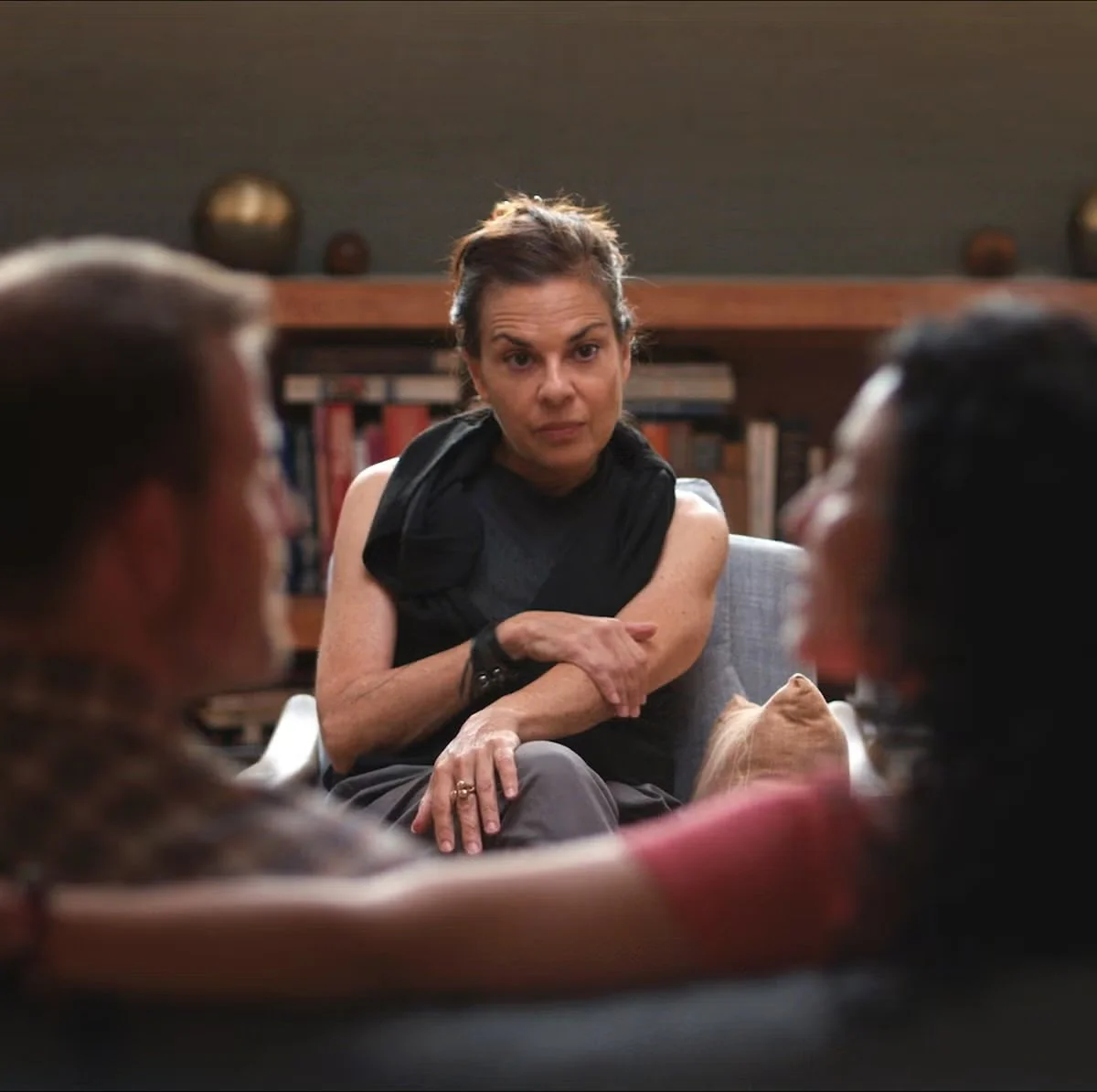
I’m not the only one who’s riveted. Couples Therapy has become a cultural phenomenon. Since it started streaming on multiple platforms, viewership has gone up. On social media, moments from the show are often clipped and shared. The show has spawned a very prolific reddit which I have been lurking in occasionally myself. Orna Guralnik has even been called “a fashion icon,” which I whole-heartedly agree with. How many times have I been watching this show and wondered, Orna, where did you get that fabulous asymmetrical top?
Why Does a Therapist Want to Watch Therapy on TV?
The show is doing so much that I find compelling. As far as reality TV goes, it doesn’t feel entirely above the drama that we see in other reality shows but it also doesn’t feel all that exploitative. Somehow, it feels less like a guilty pleasure and more like some weird parasocial vicarious healing.
To add to the allure is the fact that therapists rarely get to see how other people work once graduate training is completed. After school and training, when a psychologist is hired at an organization, they may get to shadow a few sessions led by another clinician but rarely do they get to follow the entire course of therapy for a client who is not part of their caseload. This show makes me think that’s a flawed system. Maybe we should get to see how other clinicians work more often. Maybe such demystification is beneficial to both the professionals and the general public. So yeah, the craft of psychotherapy is presented in a different way than I normally get in the field.
Watching Orna work with these couples makes me feel less alone in my own work. I feel seen and understood, like, yes, this is what it’s supposed to be. Maybe that speaks to how representations of therapists in popular culture tend toward the negative. Therapists on TV are often sleeping with their clients, murdering people, coldly indifferent, comically stupid, etc. (I have a whole other post to write about what it might mean to have such unflattering representations.) So to see this masterful therapist practicing her craft is, well, delightful.
The Four Brave Couples
The couple I thought most about after watching
After watching this season, I thought most about Sienna and Chris, who both struggled with childhood trauma and discovered that their past was haunting their current relationship. In the end, they were able to find each other through all the grief, loss, and projection but each of them had to reckon with so much pain and truth to get there. I guess I admired them and thought they were brave, perhaps braver than I am. There were moments when I found their issues too uncomfortable and triggering, thinking, there’s too much, just end it. But little by little, they found their way through a repair. It was subtle but it was amazing and inspiring to see.
The couple I found myself judging but then ended up rooting for
I initially felt judgmental towards Drea because I was like, “PLEASE get your own life.” But then, when I got the whole backstory about how Nessa broke up with her, married a man, then came back, etc., I felt tremendous compassion for her. What a chaotic ride they’ve had together! The way this couple’s story was presented seemed to prime us to think of Drea as weak because she couldn’t leave a marriage with a mercurial person who kind of jerked her around. But when more of the story was revealed, I realized that Drea’s capacity for love and forgiveness was all strength, not weakness. I ended up reading Drea’s excessive dependency on Nessa as making perfect sense because of their tumultuous relationship history. It made me realize that it actually takes incredible courage to heal from being wounded by the person you love most.
My favorite couple I just really like without knowing why
My favorite couple from this season are Marjorie and Jason. One of the reasons I love Marjorie is that she’s an Orna stan and even as she is being therapized by Orna, she is in awe of Orna, which is hilarious to watch. She says on several occasions in the middle of therapy, “Wow, you’re good.” There’s another scene where she’s walking out of the office and she says to her husband, “Oh my god she’s so good.” That’s what I’d be doing too! If I were Orna’s client and she asked me a question, I’d be like, “Wow this is so amazing.”
I’ve noticed in watching this show that I have a soft spot for burly, masculine men who start showing their tenderness and that’s what I appreciated about Jason. The backstory on this guy is also so amazing: started using heroin as a very young teen, went to rehab multiple times, finally got clean, built stability in his life. His individual journey is an awe-inspiring success story and I found myself rooting for his marriage.
The couple who taught me the most
I felt so much for Shay, like she just got to me, viscerally. Her anger is the kind of armor I know all too well. It’s trying to protect her but it’s also closing her off. I just felt such compassion for her history (being trans, kicked out of her family home), and her experience of feeling abandoned by her partner. For me as a therapist, she embodies the legacy of trauma in a very particular way. Sometimes survivors’ sense of fairness can get rigidified into harsh resentment and aggression. The feelings are valid and yet the thing they are upset about is not just the thing happening in the present, it’s also the stuff from the past and the insistence that one cannot be a victim again. Through her, I was able to see the nuances of how trauma plays out in intimate relationships. Through Clinton, I learned so much about how a later-in-life autism diagnosis can impact a relationship. As Clinton grew in his understanding of himself, he started choosing to mask less and started to connect more with other neurodivergent people. Those changes impacted Shay in painful ways and navigating all of that simultaenously can get overwhelming.
The Most Powerful Themes From This Season
The "perfect mother" fantasy
The fantasy of the “perfect mother” is universal. Orna says in one of her supervision meetings this season that all of the couples are “haunted by the mother.” Many of the people this season had mothers who were abusive, mentally ill, hypercritical, manipulative, etc., setting them up for reenacting conflict cycles and feelings of betrayal and self-loathing with their spouse. What is so hard to accept is that a mother can be and often is a deeply flawed person. We have unrealistic expectations about the kind of person who has children or how motherhood changes a person. If only it were as simple as, now that I’ve given birth to another being, I am emotionally mature and all my internal crises have been resolved.
In Korean culture, it’s so taboo to criticize one’s own family members, especially a parent. It may even be more taboo to speak critically of one’s mother, who is viewed as a relentlessly self-sacrificing entity in the family. Filial piety almost demands that one considers parents as above reproach. And that’s when ideals clash with reality. What happens when your mother hurts you, does things that she should not? So many clients I’ve worked with become consumed with ambivalence, confusion, and shame because their mothers did not attune to their emotional needs.
Differentiation
Differentiation is one of the most important concepts in couples therapy. The most celebrated and prolific researcher on this construct was a psychologist named David Schnarch. Differentiation describes the ability to stay connected to someone you love while still remaining yourself by having and expressing your own feelings, opinions, and space. It’s the difference between “I care that you’re upset” and “Your problem is now my emergency.” Schnarch put it more succinctly by saying that differentiation is the act of “holding onto yourself” in relationship.
Nessa and Drea showed this beautifully and painfully. Whenever Drea was in a mood, Nessa felt she had to do something about it. Orna named this an “undifferentiated response,” and as part of their work Drea started carcing out a few hours a week just for herself. It sounds so simple. It’s not. Nessa admitted that when they met, she “needed to be needed,” which set them both up for an undifferentiated connection.
Shay and Clinton had their own version, with Shay feeling that Clinton leaned on her too heavily. I’ve seen it time and time again. When one person becomes the other’s whole support system, both people end up exhausted and resentful.
This one gets complicated in Asian cultures. In many Korean and immigrant families, closeness means togetherness, and needing your own space can feel like rejection or betrayal in a family system where the norm is enmeshment. However, even in the collectivistic cultures, interdependence isn’t the absence of separateness. It’s the dance between the group and individual. Ultimately, even within the context of Korean culture, marriages are most functional when two whole people choose each other, rather than two halves holding each other up.
Ambiguous loss
One of Orna’s colleagues in a consultation meeting talks about ambiguous loss, which was a new term for me. Psychologist Pauline Boss coined the term “ambiguous loss” for grief that has no clear ending: losing someone in some ways but not in all ways. There’s no funeral, no ritual, and often no permission to grieve, because the person is technically still here.
This season was full of examples. Sienna lost the husband she thought she had when she learned about the affair, while he was still sitting next to her on the couch. Shay watched Clinton change as he came to understand his autism and stopped masking. He was growing in ways that were good for him, but it meant losing parts of the partner she knew. And Nessa, who wanted out of the romantic relationship, still felt abandoned when Drea didn’t want to stay friends. You can choose to leave and still grieve what you’re leaving.
I think giving this a name is a gift. So many people I’ve worked with feel confused that they’re grieving someone who’s still alive, or a relationship that technically still exists. Having words for it doesn’t make it hurt less, but it can make it feel less crazy.
What is “Success” in Couples Therapy?
By the end of the season, Shay and Clinton had broken up. Interestingly, all the couples seriously contemplated breaking up. This is totally normal. If you measure couples therapy by whether the couples stay together, it might look like a lot of failure. I don’t see it that way.
Many people are scared of couples therapy, and I understand why. Cracking things open with a professional can feel like the thing that might end the relationship, as if we have more control if we just leave it alone. But in my practice, I’ve seen couples wait too long. They walk into their first session when one or both partners already has one foot out the door. Years of resentment have calcified. Couples therapists are human beings, not miracle workers. Even someone as skilled as Orna can only do so much against years of hurt. Going sooner to couples therapy actually gives you more choices.
So what does success look like? Maybe it’s being able to say yes to one question: Did I learn something about myself in relationship that I can carry into the future? Sometimes that means finding your way back to each other, like Sienna and Chris. Sometimes it means letting go. It is okay to break up. It is okay not to repair. Maybe success is being able to live with the choices you make, and knowing why you made them.
That’s what keeps me coming back to this show. Not the drama, though there’s plenty of it, but watching people turn toward the hardest truths about themselves with someone steady beside them. As a therapist, it reminds me what this work can be. As a viewer, it reminds me that none of us is too broken, too stuck, or too late to learn something new about how we love.